☎+86-577-86826961

sales@eaglefittings.com

Pharmaceutical Valves

Our Pharmaceutical Valves series is engineered for critical fluid control in pharmaceutical, biotech, and healthcare industries, ensuring sanitary performance, precision, and compliance with strict regulatory standards. Crafted from high-grade stainless steel (316L/304), these valves minimize contamination risks with smooth, crevice-free interiors and easy-clean designs—ideal for sterile processes, CIP/SIP systems, and drug manufacturing lines.

Trusted Compliance

Every Eagle valve adheres to global pharmaceutical benchmarks, Crafted from medical-grade stainless steel (316L), our valves withstand rigorous sterilization cycles (SIP/CIP) and maintain integrity in sensitive workflows involving APIs, viral vectors, and antibody drug conjugates.

Whether for batch processing or continuous manufacturing, Eagle ensures consistent performance that aligns with GMP and ISO 13485 requirements.

Partner for Your Critical Applications

From lab-scale R&D to commercial production, Eagle collaborates with pharmaceutical leaders to solve unique flow control challenges. Our team of industry specialists delivers tailored solutions—including automated actuation options and custom end connections—to optimize your processes for speed, safety, and scalability.

FAQ

What types of valves are commonly used in the pharmaceutical industry?

The pharmaceutical industry relies on valves designed for sterility, precision, and compliance. Common types include:

Diaphragm Valves: Ideal for sterile applications (e.g., drug formulation, bioreactors) due to their crevice-free design, which eliminates dead zones and supports CIP/SIP (Clean-in-Place/Sterilize-in-Place) protocols.
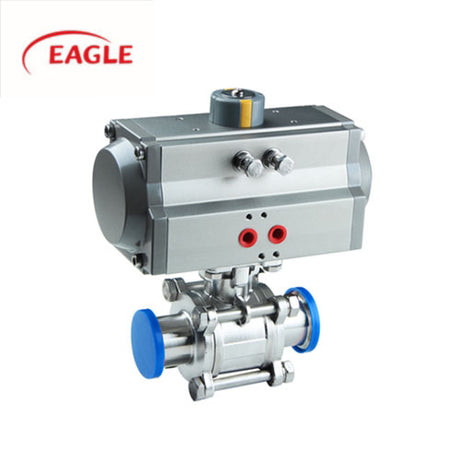
Ball Valves: Used for on/off control in high-pressure systems, offering tight shutoff and durability for non-viscous fluids.
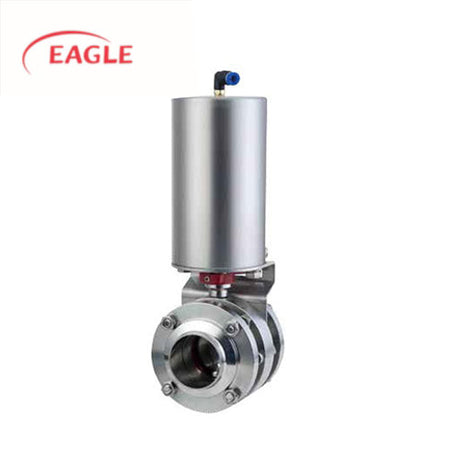
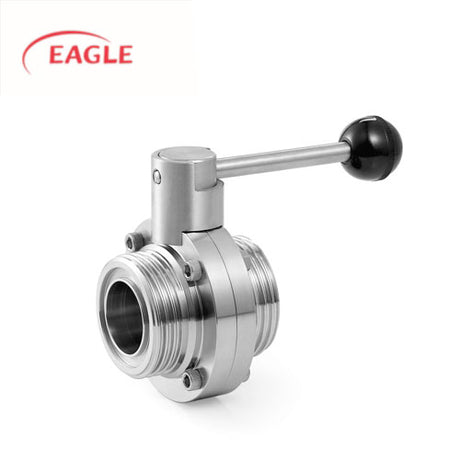
Butterfly Valves: Suitable for large-diameter lines (e.g., bulk fluid transfer) with lightweight, compact designs and cost-effectiveness for low-pressure applications.
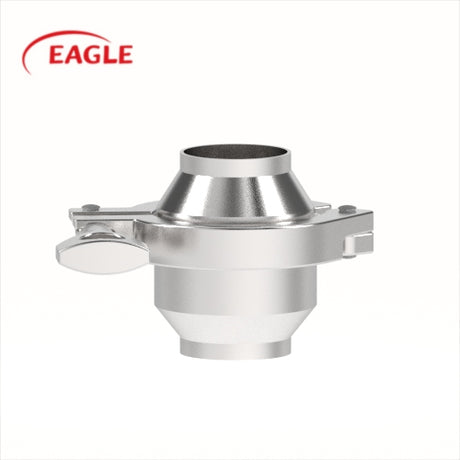
Check Valves: Prevent backflow in critical processes like API transfer or filling lines.
Sampling Valves: Enable aseptic fluid sampling without compromising system sterility.

Is a sanitary butterfly valve better than a ball valve?

Neither is universally "better"—selection depends on your specific needs:

Sanitary Butterfly Valves: Preferred for large flow rates (DN50+) and low-pressure systems. They are lightweight, easy to maintain, and cost-effective but may have minor crevices (mitigated by hygienic designs).
Sanitary Ball Valves: Excel in high-pressure applications (up to 1000+ psi) and require minimal torque for operation. Their full-bore design ensures unobstructed flow but may be heavier and costlier for large diameters.
Choose butterfly valves for size/weight efficiency; ball valves for pressure/tight shutoff needs.

What does a custom stainless steel valve cost?

Custom stainless steel valve pricing varies based on:

Size & Material Grade: Larger diameters or specialty alloys (e.g., 316L vs. standard 304) increase costs.
Design Complexity: Custom ports, actuation (manual vs. automated), or compliance with unique standards (e.g., ASME BPE) add engineering fees.
Volume: Bulk orders may qualify for discounts.
For precise pricing, contact our sales team with your specifications. Final costs are subject to configuration and market conditions.

What is the typical lead time for pharmaceutical valves?

Standard sanitary valves (e.g., diaphragm, ball valves) often ship within 1–2 weeks for common sizes. Custom designs or large-volume orders may require 3–4 weeks, depending on complexity and geographic location. For urgent needs, expedited production options are available—contact us to confirm timelines.

How should pharmaceutical valves be maintained?

To ensure longevity and sterility:

Perform CIP/SIP cycles per manufacturer guidelines (typically weekly for critical processes).
Inspect diaphragms, O-rings, and seals quarterly for wear; replace with OEM parts.
Calibrate automated actuators annually to maintain precision control.
Avoid abrasive cleaners that may damage stainless steel surfaces or coatings.