

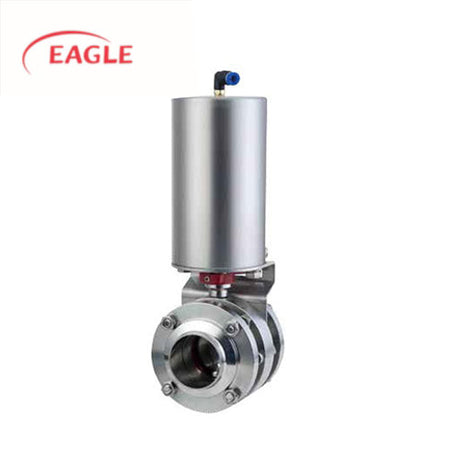
2-1/2" Sanitär-SS-Pneumatik-Absperrklappe, dreiteilig
Ab $707.50Grundpreis /Nicht verfügbar-
1-1/2" SS pneumatisches Absperrventil, dreiteilig
Ab $675.90Grundpreis /Nicht verfügbar -
4 Zoll hygienisches dreiteiliges pneumatisches Absperrventil
Ab $986.90Grundpreis /Nicht verfügbar -
2" SS 316 Dreiteiliges Sanitär-Absperrventil
Ab $707.00Grundpreis /Nicht verfügbar -
3" Edelstahl 304 Dreiteiliges Sanitär-Absperrventil
Ab $824.30Grundpreis /Nicht verfügbar -
1" Edelstahl-Sanitär-Dreiteiler-Flansch-Absperrklappe
Ab $681.00Grundpreis /Nicht verfügbar 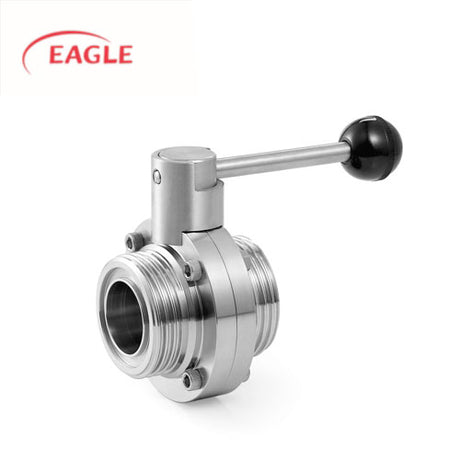
2-1/2 Zoll Absperrklappe mit Gewinde
Ab $198.70Grundpreis /Nicht verfügbar-
2 Zoll manuelles Absperrventil aus Edelstahl mit Gewinde
Ab $160.80Grundpreis /Nicht verfügbar -
4-Zoll-Gewinde-Schmetterlingsventil
Ab $317.90Grundpreis /Nicht verfügbar -
3-Zoll-Gewinde-Schmetterlingsventil
Ab $230.10Grundpreis /Nicht verfügbar 
EAGLE ™ Sanitär-Reparatursatz für dreiteilige Absperrklappen
$10.00Grundpreis /Nicht verfügbar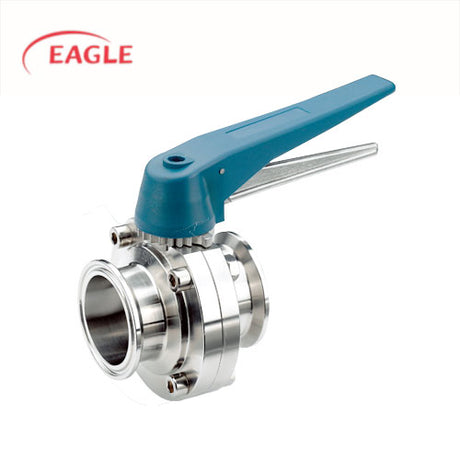
EAGLE ™ Tri-Clamp Absperrklappe mit Kunststoffgriff
Ab $140.50Grundpreis /Nicht verfügbar
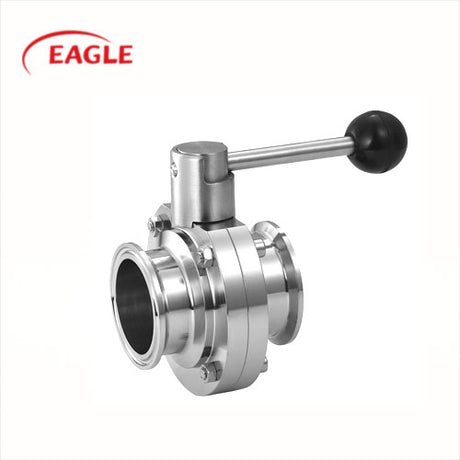

EAGLE ™ Pneumatisches Sanitär-Absperrventil, 3-teilig
Ab $675.90Grundpreis /Nicht verfügbar-
EAGLE™ 3A pneumatisches dreiteiliges Absperrventil
Ab $675.90Grundpreis /Nicht verfügbar


Sanitary Stainless Steel Butterfly Valves: The Smart Choice for High-Flow Applications
When process engineers face high-flow challenges in food, dairy, or pharmaceutical applications, they increasingly turn to sanitary stainless steel butterfly valves. These workhorse valves deliver reliable performance where it matters most—in your main process lines, tank outlets, and bulk transfer systems.
Here's a practical perspective: If you're moving 200 gallons per minute through a 6-inch line, a traditional ball valve would be heavy, expensive, and slow to operate. A stainless steel butterfly valve, by contrast, offers smooth quarter-turn operation with significantly less weight and cost. It's not just a component purchase—it's an operational upgrade.
Practical Insight: Many plants start with ball valves for all applications, then discover butterfly valves when they expand to larger diameter lines. The cost savings at 4-inch and above can be substantial—often enough to fund additional process improvements elsewhere in your facility.
Why Industry Professionals Choose Our Butterfly Valves
Over the past decade, we've supplied butterfly valves to facilities across three continents. Here's what our customers consistently appreciate:
Exceptional Flow Characteristics
With the disc positioned parallel to flow when fully open, our stainless steel butterfly valves create minimal turbulence and pressure drop. This translates directly to energy savings in high-volume applications.
Space-Efficient Design
In crowded processing areas where every square inch counts, butterfly valves offer a compact footprint. They install directly between flanges without extensive pipe modifications.
Reliable Shut-Off Performance
Our PTFE or EPDM seats provide bubble-tight sealing when closed, while the 316L stainless steel disc withstands repeated cycling without degradation.
Simplified Maintenance
Unlike complex multi-component valves, our sanitary butterfly valves feature straightforward designs. Seal replacement typically takes under an hour, minimizing downtime during planned maintenance.
Technical Specifications for Different Applications
| Application Focus | Recommended Size | Key Features | Typical Industries |
|---|---|---|---|
| Main Process Lines | 4" to 8" (DN100-DN200) | Wafer style, pneumatic actuation, position feedback | Dairy, Beverage, Brewing |
| Bulk Tank Outlets | 6" to 12" (DN150-DN300) | Lug style, manual gear operator, extended neck | Food Processing, Pharmaceuticals |
| CIP Supply/Return | 3" to 6" (DN80-DN150) | Tri-clamp connections, EPDM seats, full-bore design | All sanitary industries |
| Utility Services | 2" to 4" (DN50-DN100) | Standard pneumatic actuation, cost-optimized | Multiple industries |
Material Selection Guidance
Choosing the right materials impacts both performance and longevity:
Body & Disc
316L stainless steel, electropolished to Ra ≤ 0.8μm. Optional PFA coating for exceptional chemical resistance.
Seat Materials
EPDM for general use, FKM for high-temperature applications, PTFE for aggressive chemicals.
Stem Seals
Double O-ring design with food-grade lubricant for reliable sealing and easy maintenance.
Where These Valves Make a Difference
Based on installations across hundreds of facilities, here's where stainless steel sanitary butterfly valves consistently outperform alternatives:
Dairy Processing Lines
In milk and cheese production, 6-inch butterfly valves control flow between pasteurizers, separators, and storage tanks. Their quick operation allows rapid changeovers between products.
Brewery Fermentation Control
Craft and commercial breweries use 3-inch and 4-inch butterfly valves to manage wort transfer and tank isolation. The sanitary design prevents contamination during critical fermentation stages.
Pharmaceutical Buffer Prep
In WFI (Water for Injection) and buffer preparation systems, 2-inch and 3-inch butterfly valves provide reliable control with minimal dead legs. The electropolished finish meets stringent cleanability requirements.
Answers to Common Questions About Butterfly Valves
What's the main advantage of stainless steel butterfly valves over other types?
Stainless steel construction provides corrosion resistance essential for sanitary applications, while the butterfly design offers an excellent balance of cost, weight, and performance for larger pipe sizes. For 4-inch and above applications, butterfly valves typically cost 30-40% less than equivalent ball valves while providing similar flow characteristics with faster operation.
How do I decide between wafer-style and lug-style butterfly valves?
Wafer-style valves are lighter and less expensive, designed to fit between two flanges. They're ideal for most inline applications. Lug-style valves have threaded inserts that allow them to be installed at the end of a pipe run or when one side needs to be isolated. For tank outlets or systems requiring frequent disconnection, lug-style provides more flexibility.
What maintenance should I expect with sanitary butterfly valves?
With proper installation, these valves require minimal routine maintenance. We recommend inspecting seals annually and replacing them every 2-3 years depending on cycle frequency and media. The most common maintenance task is seat replacement, which typically takes 45-60 minutes with basic tools. We provide detailed maintenance guides with each valve.
What's your lead time for standard sizes?
Popular sizes (2", 3", 4", 6") typically ship within 5-7 business days. Less common sizes (8", 10", 12") may require 2-3 weeks. For emergency requirements, we maintain a limited inventory of 3-inch and 4-inch valves that can ship within 48 hours. Custom configurations (special actuators, connections, or materials) generally require 3-4 weeks.
Do you offer custom configurations for specific applications?
Yes, we regularly customize valves for unique applications. Common modifications include extended stems for insulated lines, special port configurations, position indicators, and custom actuator mounting. We recommend discussing your specific requirements early in the planning process to ensure optimal results and reasonable lead times.
Ready to Discuss Your Specific Application?
Every processing facility has unique challenges. Share your requirements, and we'll provide valve recommendations based on similar successful installations.
Get Expert Recommendations →Quality & Compliance: What Sets Our Valves Apart
Certifications You Can Trust
Our manufacturing processes and quality systems meet the strictest industry requirements:
Our Testing Protocol
Every valve undergoes comprehensive testing before shipment:
Pressure Testing
Each valve tested at 1.5x rated pressure for minimum 3 minutes with zero leakage.
Surface Verification
Surface roughness measured at multiple points to ensure Ra ≤ 0.8μm specification.
Material Traceability
Complete material certificates provided with heat numbers for full traceability.
Functional Testing
Full open/close cycling with torque measurement to ensure smooth operation.
Top-Tipps für Sie
Alle anzeigen-


EAGLE™ 3A Hygienisches Probenahmeventil mit Stopfen
Auf Lager (40 Einheiten)Ab $320.86Grundpreis /Nicht verfügbar -

2-Zoll x 1-Zoll Edelstahl-Konzentrischer Reduzierer
Ab $43.30Grundpreis /Nicht verfügbar -
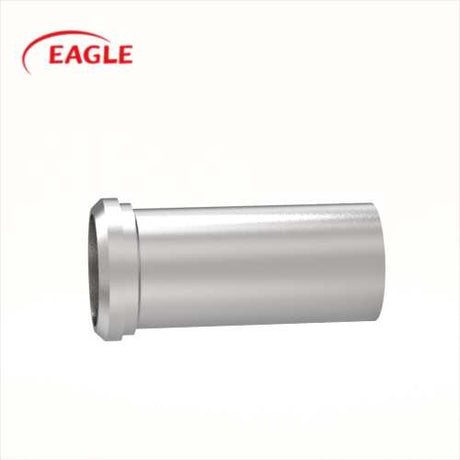
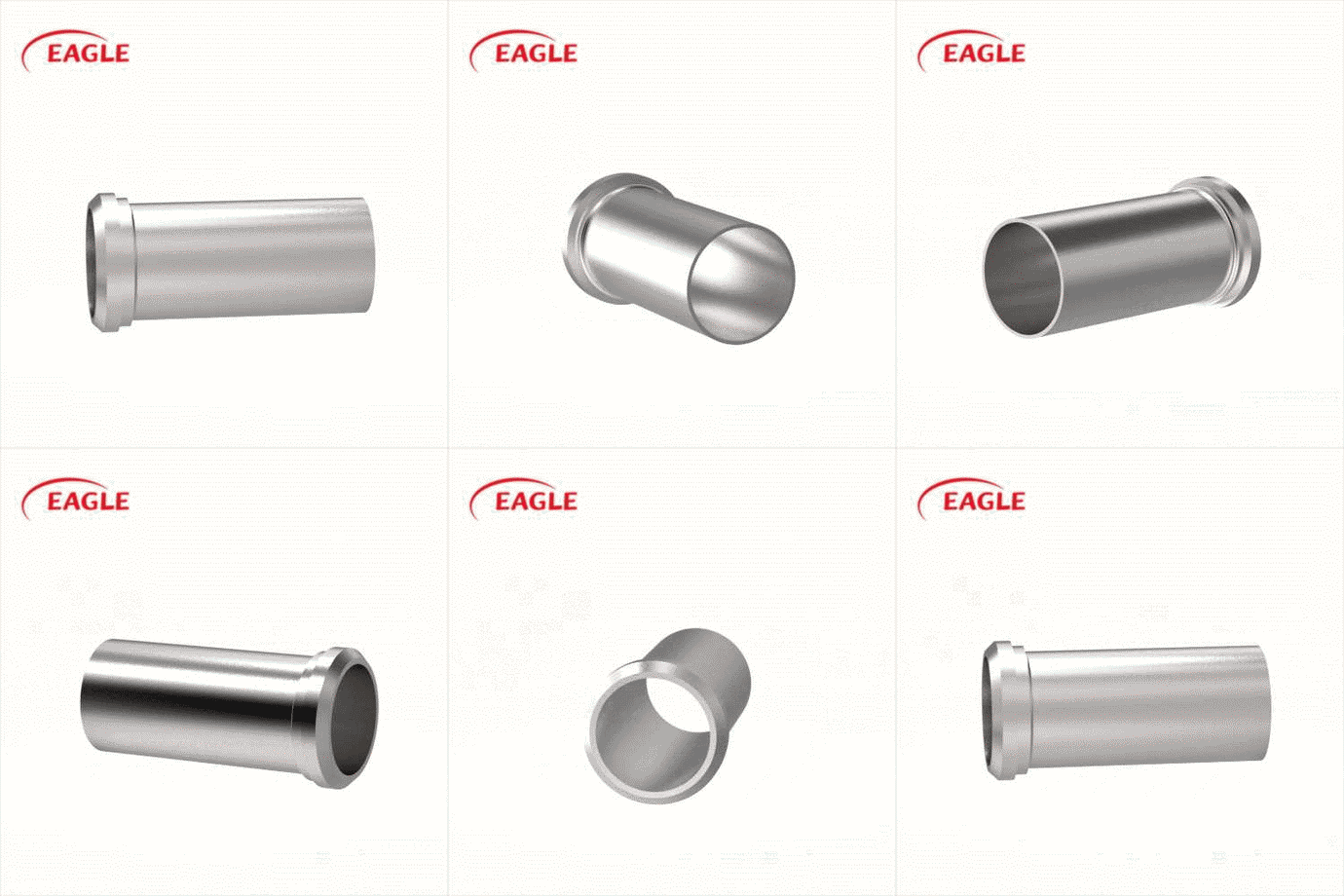
EAGLE™ 3A 14AHT Tygon-Schlauchadapter mit einfachem Kegelsitz
Sehr geringer Bestand (2 Einheiten)Ab $31.10Grundpreis /Nicht verfügbar -
2" Sanitär-Tygon-Schlauchadapter mit einfachem Schrägsitz
Sehr geringer Bestand (2 Einheiten)Ab $40.70Grundpreis /Nicht verfügbar -
1" Sanitär-Tygon-Schlauchadapter mit einfachem Schrägsitz
Sehr geringer Bestand (2 Einheiten)Ab $31.10Grundpreis /Nicht verfügbar -
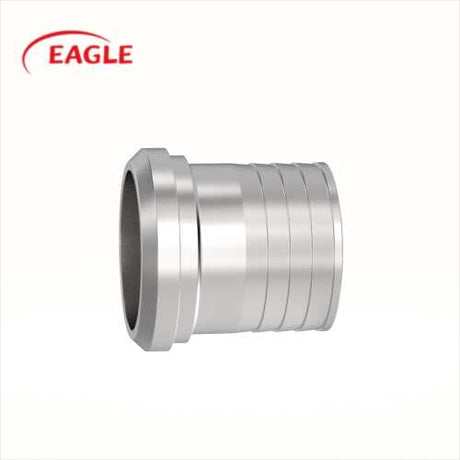
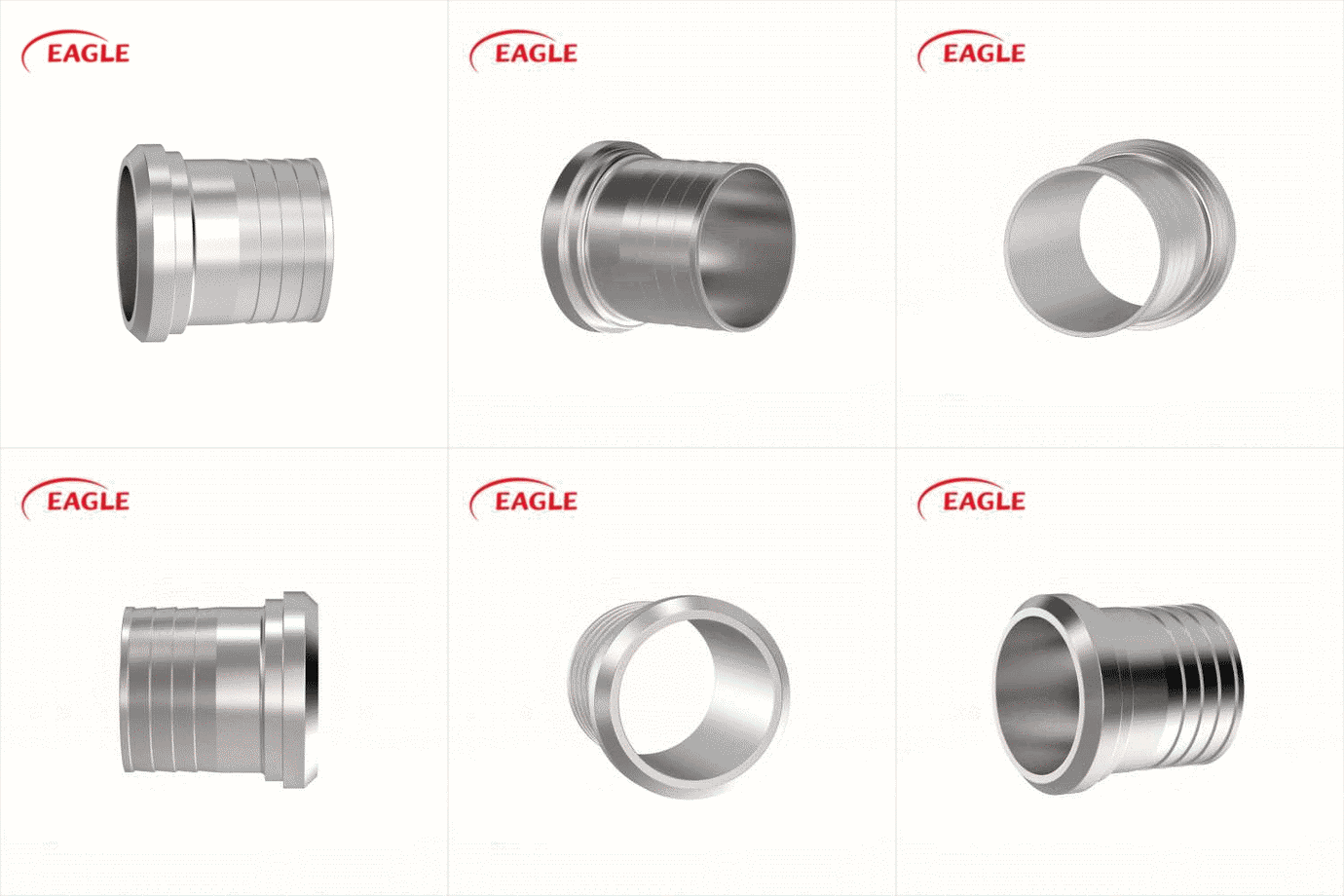
4" Gummischlauchadapter mit einfachem Kegelsitz
Sehr geringer Bestand (2 Einheiten)Ab $167.00Grundpreis /Nicht verfügbar -
2-1/2" Gummischlauchadapter mit einfachem Kegelsitz
Sehr geringer Bestand (2 Einheiten)Ab $128.00Grundpreis /Nicht verfügbar -
2" Gummischlauchadapter mit einfachem Kegelsitz
Sehr geringer Bestand (2 Einheiten)Ab $80.00Grundpreis /Nicht verfügbar -
1-1/2" Gummischlauchadapter mit einfachem Kegelsitz
Sehr geringer Bestand (2 Einheiten)Ab $55.30Grundpreis /Nicht verfügbar -
1" Gummischlauchadapter mit einfachem Kegelsitz
Sehr geringer Bestand (2 Einheiten)Ab $55.00Grundpreis /Nicht verfügbar -
3" Gummischlauchadapter mit einfachem Kegelsitz
Sehr geringer Bestand (2 Einheiten)Ab $147.00Grundpreis /Nicht verfügbar -
2-1/2" Außendurchmesser 304/316L Sanitär-Edelstahlrohr
Ab $131.20Grundpreis /Nicht verfügbar


