

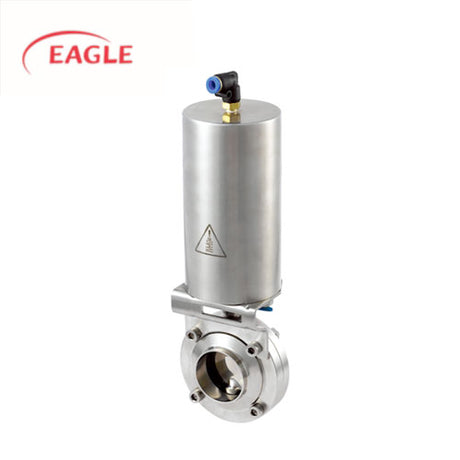
EAGLE™ 3A pneumatisches geschweißtes Absperrventil
Ab $552.90Grundpreis /Nicht verfügbar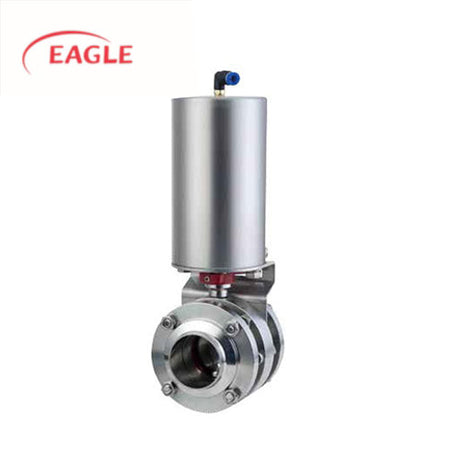
EAGLE™ 3A pneumatisches dreiteiliges Absperrventil
Ab $675.90Grundpreis /Nicht verfügbar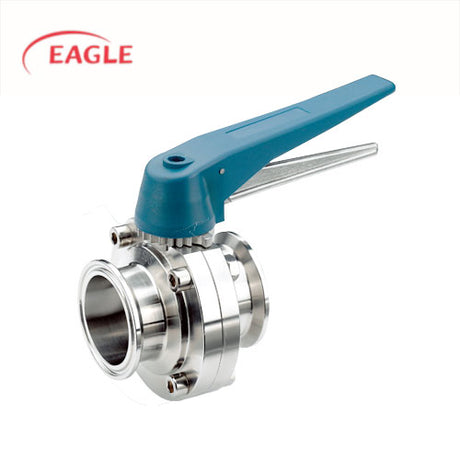
EAGLE ™ Tri-Clamp Absperrklappe mit Kunststoffgriff
Ab $140.50Grundpreis /Nicht verfügbar
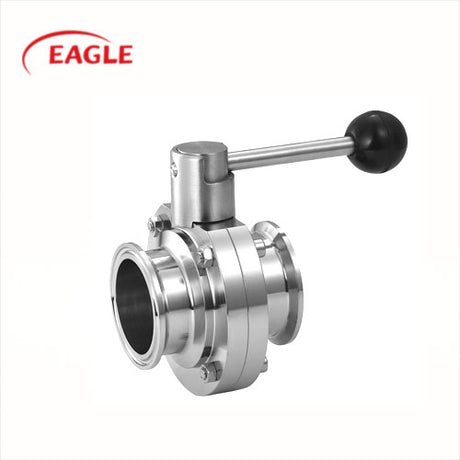
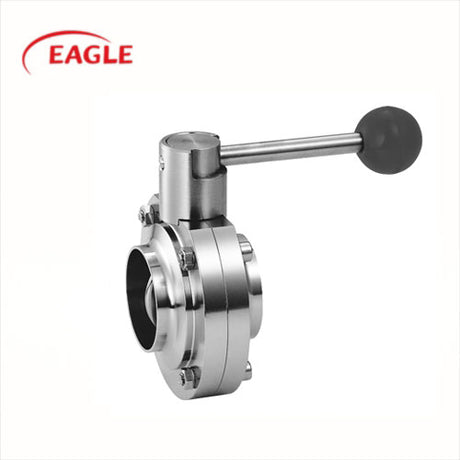
EAGLE ™ Sanitäres geschweißtes Absperrventil
Ab $121.50Grundpreis /Nicht verfügbar
EAGLE ™ Sanitär-Reparatursatz für dreiteilige Absperrklappen
$10.00Grundpreis /Nicht verfügbar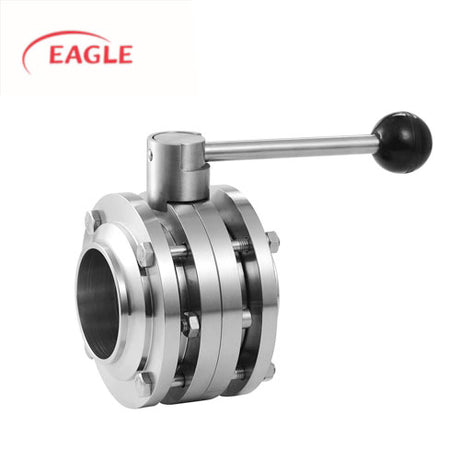
EAGLE ™ Sanitäres dreiteiliges Absperrventil
Ab $245.00Grundpreis /Nicht verfügbar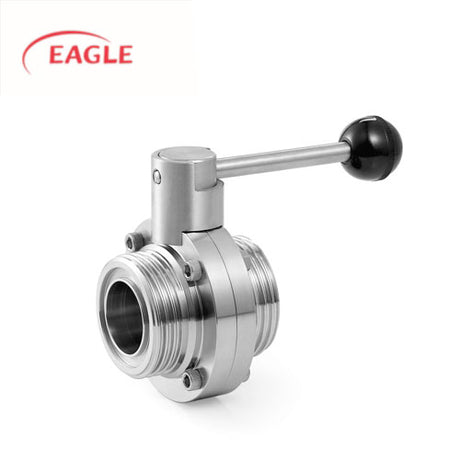
EAGLE ™ Sanitäres Absperrventil mit Gewinde
Ab $140.50Grundpreis /Nicht verfügbar
EAGLE ™ Hygienisches pneumatisches Klemm-Absperrventil
Ab $575.90Grundpreis /Nicht verfügbar
EAGLE ™ Pneumatisches Sanitär-Absperrventil, 3-teilig
Ab $675.90Grundpreis /Nicht verfügbar


Sanitary Butterfly Valves: Your High-Flow Solution
When you need to control larger flow volumes without sacrificing hygiene, sanitary butterfly valves deliver unmatched performance. Unlike traditional valves that struggle with high-flow applications, our butterfly valves provide a compact, efficient solution that's perfect for bulk transfer operations.
Consider this scenario: You're transferring 500 gallons of product between tanks. A ball valve would require significant torque and time. Our butterfly valve? A simple 90-degree turn provides full flow control in seconds. It's not just a valve—it's an efficiency upgrade for your entire process line.
Key Distinction: While ball valves are ideal for precise control in smaller lines (typically under 4 inches), butterfly valves excel in larger diameter applications (2 inches and above) where quick operation and space savings are critical.
Designed for High-Flow Applications
Compact & Lightweight
Up to 75% lighter than equivalent ball valves, reducing strain on piping systems while saving valuable space in crowded process areas.
Rapid Operation
Quarter-turn actuation allows for fast opening/closing—critical for batch processes and emergency shut-off situations in large-diameter lines.
Cost-Effective Scaling
As line sizes increase, butterfly valves become significantly more economical than ball valves—often 30-50% less expensive for 4-inch and larger applications.
Low Pressure Drop
When fully open, the disc presents minimal obstruction to flow, reducing energy consumption in high-flow systems.
Engineering Specifications
| Parameter | Specification | Application Note |
|---|---|---|
| Size Range | 2" to 12" (DN50 to DN300) | Ideal for main transfer lines and tank outlets |
| Pressure Rating | Up to 150 PSI (10 bar) | Suitable for most sanitary pumping systems |
| Temperature Range | -20°C to 120°C | Optimized for typical process temperatures |
| Disc Materials | 316L SS, Electropolished | Optional PFA or PTFE coatings available |
| Seat Options | EPDM, FKM, PTFE | Choose based on media compatibility |
| Connection Types | Tri-clamp, Wafer, Lug | Wafer style reduces weight and cost |
Sizing Recommendation
For optimal performance in sanitary applications:
- 2-4 inch: Perfect for branch lines and secondary transfers
- 4-8 inch: Ideal for main process lines and tank-to-tank transfers
- 8-12 inch: Best suited for bulk storage and large-volume applications
Where Butterfly Valves Excel
Large Tank Outlets
Controlling flow from 5,000+ gallon storage tanks where quick shut-off is essential during changeovers or emergencies.
Main Process Headers
Isolating sections of your main process line for maintenance without requiring multiple smaller valves.
High-Flow Transfer Lines
Moving large volumes quickly between processing areas—perfect for breweries, dairies, and bulk pharmaceutical operations.
CIP Supply & Return
Controlling high-volume cleaning solutions during Clean-in-Place operations across multiple process lines.
Common Questions About Sanitary Butterfly Valves
When should I use a butterfly valve instead of a ball valve?
Choose butterfly valves when you need: 1) Large diameter flow control (typically 2 inches and above), 2) Quick operation with minimal torque, 3) Space-saving design in crowded piping racks, 4) Cost-effective scaling for larger pipe sizes. Ball valves remain better for smaller lines requiring precise throttling or absolute bubble-tight shut-off.
Where are butterfly valves most commonly used in sanitary applications?
Butterfly valves excel in: Main process headers (4-12 inch lines), bulk storage tank outlets, high-volume transfer applications, CIP supply and return lines, and anywhere space or weight constraints make ball valves impractical. They're particularly popular in dairy, brewery, and large-scale pharmaceutical operations where rapid, high-volume flow control is essential.
Why choose a sanitary butterfly valve over other valve types?
Butterfly valves offer unique advantages: 1) Significantly lower cost for larger sizes compared to ball valves, 2) Lighter weight reduces piping stress, 3) Compact design saves installation space, 4) Quick quarter-turn operation, 5) Excellent flow characteristics with minimal pressure drop. For high-flow sanitary applications, they provide the best balance of performance, cost, and efficiency.
What is your lead time for 6-inch sanitary butterfly valves?
Standard 6-inch configurations typically ship within 1 week. Popular sizes (2", 3", 4", 6") are maintained in inventory for immediate shipment. Custom configurations (special connections, actuators, or materials) generally require 2-3 weeks depending on specifications.
Do you offer custom actuator options for butterfly valves?
Yes, we provide pneumatic, electric, and manual actuator options. For sanitary applications, we recommend stainless steel pneumatic actuators with cleanroom-compatible finishes. We can match any industry-standard mounting pattern and provide position feedback switches for process automation integration.
Need a Valve Recommendation?
Tell us about your application—pipe size, media, temperature, pressure—and we'll recommend the right valve for your specific needs.
Get Custom Recommendation →Industry Compliance & Quality Assurance
Our Sanitary Standards
Every butterfly valve is manufactured and tested to meet rigorous industry requirements:
Quality Verification Process
- 100% pressure testing at 1.5x rated pressure
- Surface finish verification (Ra ≤ 0.8 μm)
- Material certification traceability
- Bubble-tight seat testing
- Actuator function verification
- Cleanroom packaging inspection
Top-Tipps für Sie
Alle anzeigen-


EAGLE™ 3A Hygienisches Probenahmeventil mit Stopfen
Auf Lager (40 Einheiten)Ab $320.86Grundpreis /Nicht verfügbar -

2-Zoll x 1-Zoll Edelstahl-Konzentrischer Reduzierer
Ab $43.30Grundpreis /Nicht verfügbar -
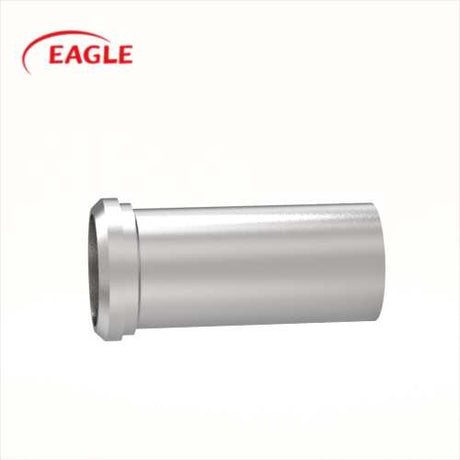
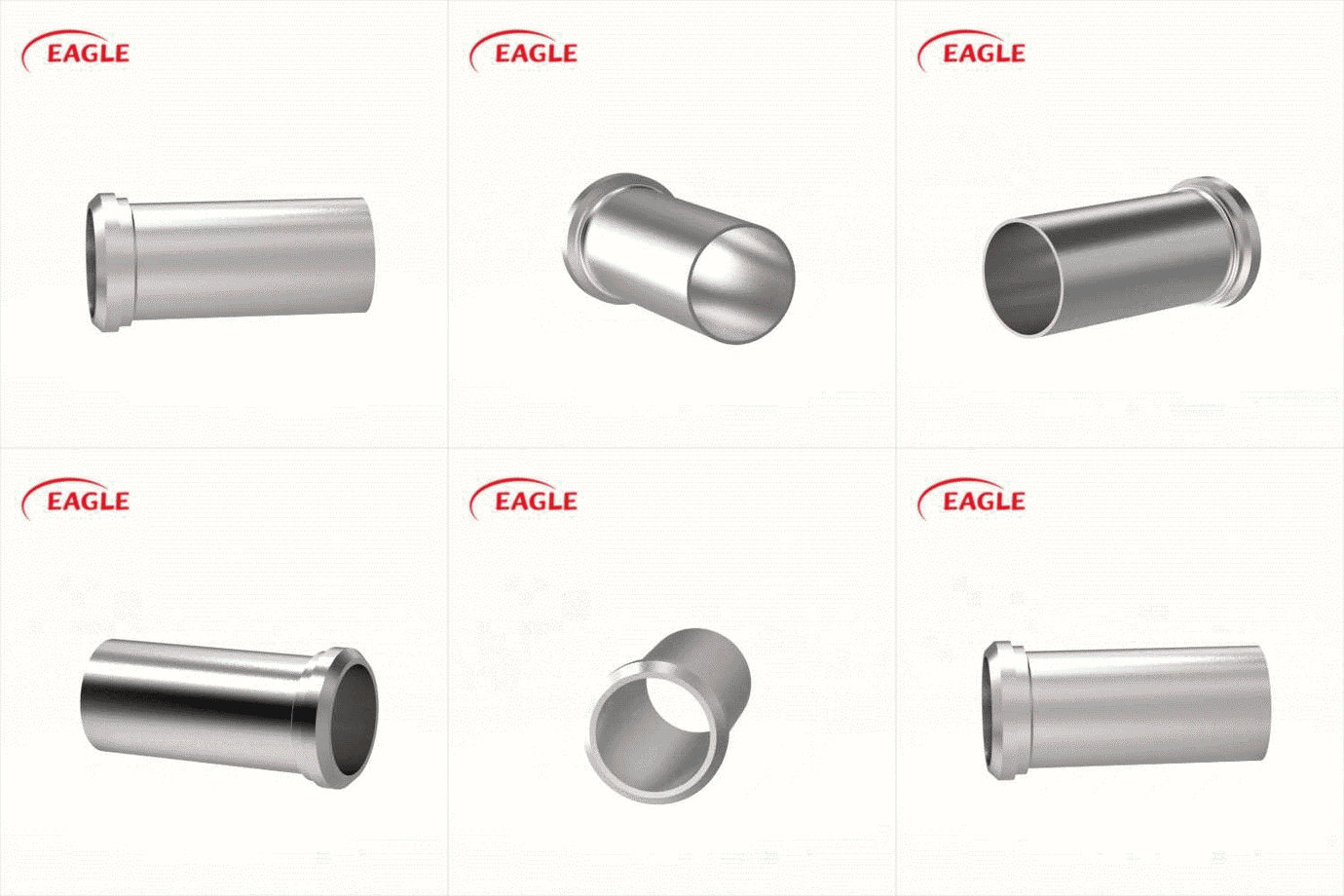
EAGLE™ 3A 14AHT Tygon-Schlauchadapter mit einfachem Kegelsitz
Sehr geringer Bestand (2 Einheiten)Ab $31.10Grundpreis /Nicht verfügbar -
2" Sanitär-Tygon-Schlauchadapter mit einfachem Schrägsitz
Sehr geringer Bestand (2 Einheiten)Ab $40.70Grundpreis /Nicht verfügbar -
1" Sanitär-Tygon-Schlauchadapter mit einfachem Schrägsitz
Sehr geringer Bestand (2 Einheiten)Ab $31.10Grundpreis /Nicht verfügbar -
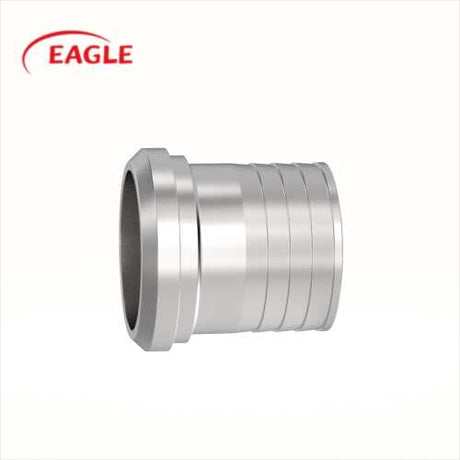
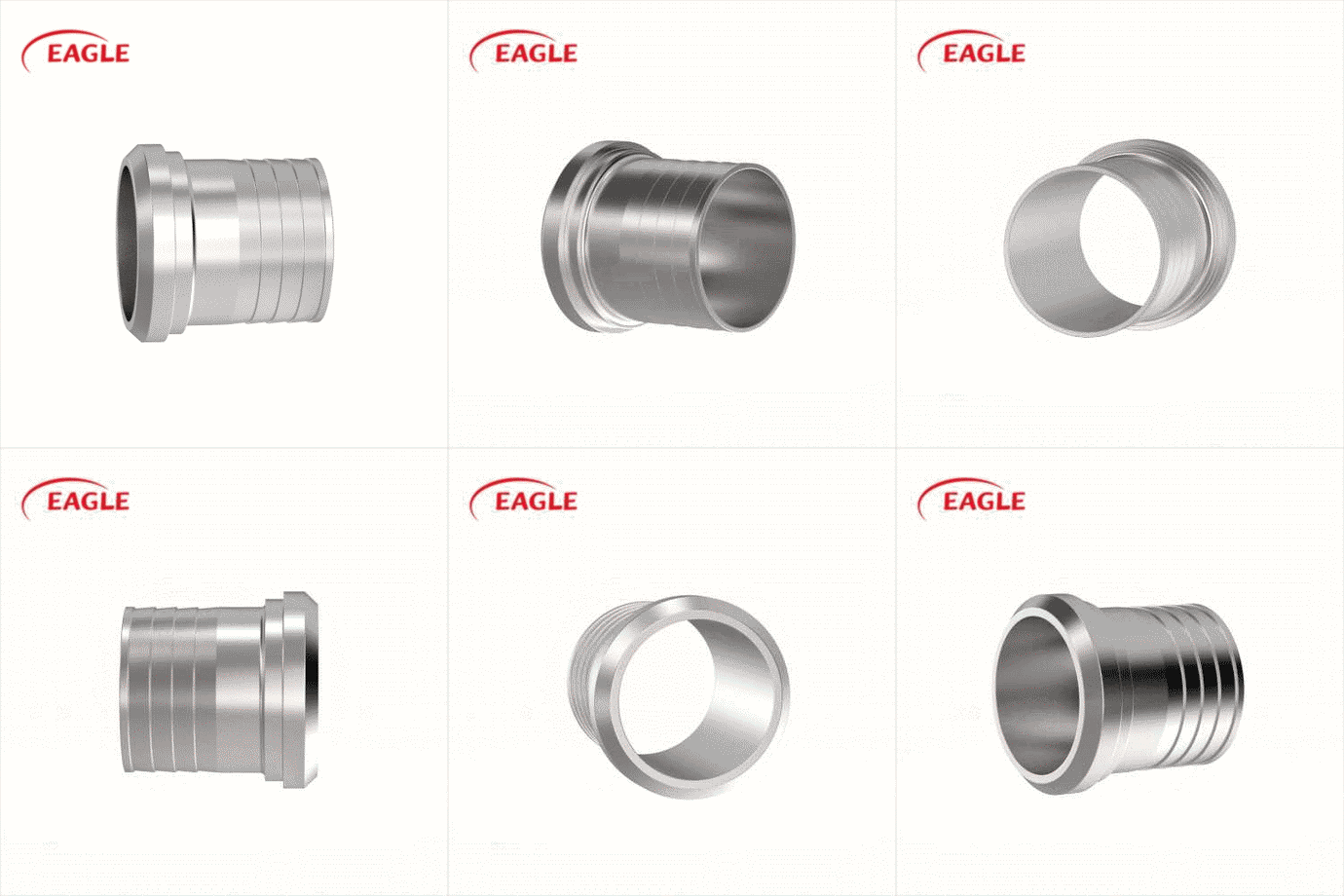
4" Gummischlauchadapter mit einfachem Kegelsitz
Sehr geringer Bestand (2 Einheiten)Ab $167.00Grundpreis /Nicht verfügbar -
2-1/2" Gummischlauchadapter mit einfachem Kegelsitz
Sehr geringer Bestand (2 Einheiten)Ab $128.00Grundpreis /Nicht verfügbar -
2" Gummischlauchadapter mit einfachem Kegelsitz
Sehr geringer Bestand (2 Einheiten)Ab $80.00Grundpreis /Nicht verfügbar -
1-1/2" Gummischlauchadapter mit einfachem Kegelsitz
Sehr geringer Bestand (2 Einheiten)Ab $55.30Grundpreis /Nicht verfügbar -
1" Gummischlauchadapter mit einfachem Kegelsitz
Sehr geringer Bestand (2 Einheiten)Ab $55.00Grundpreis /Nicht verfügbar -
3" Gummischlauchadapter mit einfachem Kegelsitz
Sehr geringer Bestand (2 Einheiten)Ab $147.00Grundpreis /Nicht verfügbar -
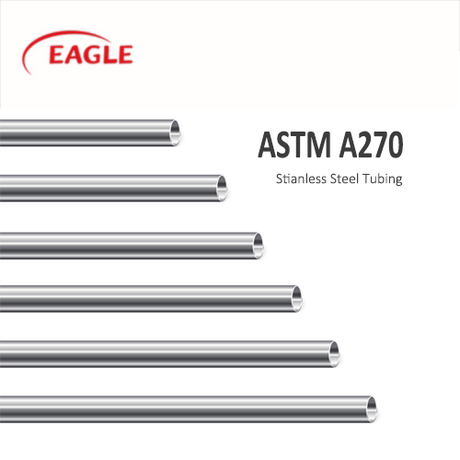
2-1/2" Außendurchmesser 304/316L Sanitär-Edelstahlrohr
Ab $131.20Grundpreis /Nicht verfügbar


