

3/4" Außendurchmesser 304/316L Sanitär-Edelstahlrohr
Ab $103.40Grundpreis /Nicht verfügbar-
2-1/2" Außendurchmesser 304/316L Sanitär-Edelstahlrohr
Ab $131.20Grundpreis /Nicht verfügbar -
Nahtloses 304/316L Edelstahlrohr mit Außendurchmesser von 1 1/2 Zoll
Ab $89.80Grundpreis /Nicht verfügbar -
Ab $71.70Grundpreis /Nicht verfügbar
-
Ab $150.90Grundpreis /Nicht verfügbar
-
1/2" Außendurchmesser, Rundrohr aus Edelstahl 316
Ab $83.40Grundpreis /Nicht verfügbar -
Ab $107.00Grundpreis /Nicht verfügbar
-
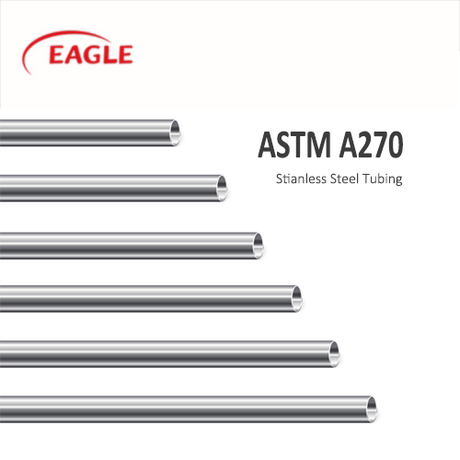
ASTM A270 Sanitärrohre aus Edelstahl
Ab $71.70Grundpreis /Nicht verfügbar 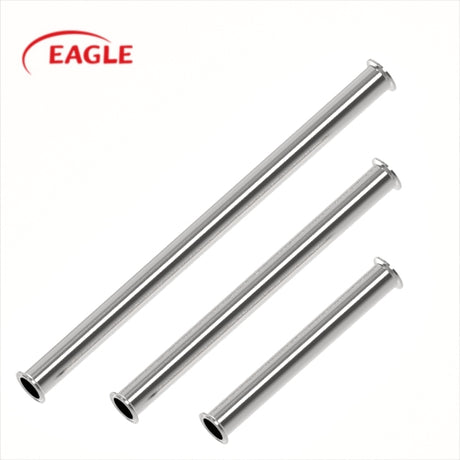
EAGLE™ 3A Tri-Clamp-Spulenbaugruppe
Ab $97.80Grundpreis /Nicht verfügbar-
EAGLE™ ASTM A270 Edelstahlrohr (40″ vorgeschnitten)
Ab $71.70Grundpreis /Nicht verfügbar 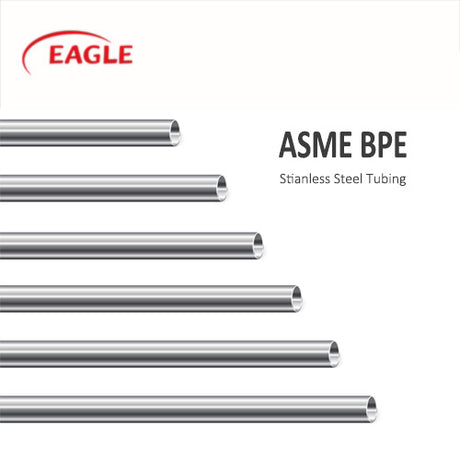
EAGLE™ BioPharma Edelstahlrohre (ASME BPE) (Verkauf pro Meter)
Ab $8.24Grundpreis /Nicht verfügbar
Food Grade Stainless Steel Tubing: Essential for Sanitary Processing Systems
When purity of the product and prevention of contamination are have to be, food grade stainless steel tubing allows you to make reliable, high quality sanitary processing systems. Sanitary tubing is not the same as regular tubing and it has been designed to comply with rigorous hygiene protocols in the food, beverage, pharmaceutical and biotechnology sectors.
For example, in dairy or pharmaceutical production, a pit or rust on a surface can harbor bacteria and it can be a risk to the product. Our A270 sanitary tubing has smooth, crevice-free, internal surfaces and our electropolished finishes reduce the potential for bacterial adhesion and help facilitate cleaning procedures.
Industry Standard: For high-purity applications, BPE tubing (Bioprocessing Equipment) has become the gold standard in pharmaceutical and biotech industries, while A270 and 3-A certified tubing dominate food and beverage applications where regulatory compliance is essential.
Superior Performance for Sanitary Applications
Crevice-Free Design
Internally polished to Ra ≤ 0.8μm (32 microinch) surface finish, our stainless steel tubing eliminates areas where bacteria could accumulate, supporting effective CIP/SIP cleaning protocols.
Material Integrity
Manufactured from certified 316L or 304L stainless steel with full material traceability, ensuring corrosion resistance and compliance with FDA, USDA, and 3-A sanitary standards.
Precision Dimensions
Consistent OD/ID tolerances ensure proper fitment with sanitary fittings, while straightness and roundness specifications support automated orbital welding processes.
Certified Quality
Comprehensive documentation including material certificates, mill test reports, and surface roughness certification supports validation requirements in regulated industries.
Technical Specifications & Standards
| Specification | Food Grade Tubing | BPE Tubing | Application Guidance |
|---|---|---|---|
| Material Grade | 304L, 316L Stainless Steel | 316L (BPE compliant) | 316L for corrosive media, 304L for general use |
| Surface Finish | Ra ≤ 0.8μm (32 μin) | Ra ≤ 0.5μm (20 μin) | Electropolished for optimal cleanability |
| Size Range | 1/2" to 12" OD | 1/4" to 12" OD | Wall thickness from 0.065" to 0.120" |
| Pressure Rating | Varies by schedule | Per ASME BPE standards | Schedule 5S to 40S available |
| Certifications | 3-A, FDA, USDA | ASME BPE, FDA, cGMP | Full material traceability provided |
| Connection Methods | Orbital welding, sanitary fittings | Orbital welding (preferred) | Autogenous butt welds for zero crevices |
Common Size Applications
Recommended tubing sizes for typical sanitary applications:
- 1/2" to 1" tubing: Instrumentation lines, sample systems, vent lines
- 1.5" to 3" tubing: Process transfer lines, CIP supply, WFI distribution
- 4" to 6" tubing: Main headers, tank transfers, high-flow applications
- 8" to 12" tubing: Bulk storage, large volume transfers, main supply lines
Critical Applications for Sanitary Tubing
Food & Beverage Processing
In dairy, brewing, and beverage production, sanitary tubing ensures product purity from raw material intake through final packaging, meeting 3-A and FDA standards for food contact surfaces.
Pharmaceutical & Biotech
BPE tubing provides the foundation for aseptic processing systems, WFI distribution, and bioreactor piping where surface quality and material purity are critical for product safety.
Cosmetic & Personal Care
For lotions, creams, and liquid products, food grade tubing maintains product integrity while meeting cosmetic GMP requirements for hygienic manufacturing environments.
Dairy & Brewery Systems
From milk pasteurization to beer fermentation, A270 certified tubing provides reliable performance with surfaces that withstand frequent cleaning and sterilization cycles.
Essential Information About Sanitary Tubing
What is sanitary tubing?
It is the term used to describe stainless steel piping and tubing that is made for food grade applications, and is intended to be used in environments that require it to be hygienic for the end user. Whereas typical industrial pipes have ridges on their insides, sanitary tubing is smooth with no crevices and is electropolished with certified materials recognized by the fda, usda, 3-a or asme bpe for food and drink or pharmaceutical and biotech industries.
What type of pipe is used for sanitary applications?
304L/316L stainless steel tubing is the most widely used for the sanitary requirement. 316L stainless steel tube is resistant to corrosion for aggressive media and 304L is economical for general use Both grades have to comply withdrain finish (Ra ≤ 0.8μm for food grade, Ra ≤ 0.5μm for BPE) for 3A and are full traceable in materials and processing through out to prove in your regulations.
What is the pressure rating of sanitary tubing?
The rating of sanitary tubing pressure depends on a range of material grade (304L vs 316L), wall thickness (schedule 5S, 10S, 40S), size and temperature. Thin-wall tubing is designed for working pressures as low as 150 PSI and schedule 40S is rated for working pressures in excess of 1000 PSI. All these pressure ratings must be in accordance with ASME B31. 3, and specific calculations should include temperature, corrosion allowance and the safety factor specific to your application.”. .
What do sanitary fittings mean?
Sanitary fittings are connectors patented or not for clean piping nozzles that can be cleaned and that are not prone to harbouring bacteria. These fittings have polished surfaces, crevices-free and allowed for frequent cleaning and servicing, with easy disconnections (tri-clamp fittings). Much like the food grade industrial fittings, the sanitary fittings are required to adhere to specific standards (3-A, ASME BPE, ISO) and are made from traceable materials with surface finishes that protect against bacterial adhesion.
What is the difference between A270 and BPE tubing?
A270 tubing Is in line with the ASTM A270 standards for use in Clean and sanitary environments such as food and dairy processing featuring surface finishes of Ra ≤ 0.8μm. BPE tubing (ASME BPE standard) is intended for bioprocessing and pharmaceutical usage and has more strict regulations RoHS compliant tubing for hot and cold water suppliers with Ra ≤ 0.5µm surface finish tighter sector size tolerances and Enhanced Documentation for validation. BPE tubing is the highest quality for aseptic processing systems.
Need Technical Specifications for Your Application?
Contact our engineering team for material recommendations, sizing guidance, and certification requirements for your specific sanitary tubing needs.
Request Technical Consultation →Quality Standards & Compliance Assurance
Industry Compliance Certifications
Our food grade stainless steel tubing meets all major industry standards for hygienic applications:
Quality Verification & Testing
- Surface roughness verification (Ra measurement)
- Material certification with heat number traceability
- Chemical composition analysis per ASTM standards
- Dimensional accuracy verification
- Visual inspection for surface defects
- Passivation testing for corrosion resistance
- Cleanliness testing per IEST standards
- Hydrostatic pressure testing (when specified)
Material Selection Guide
304L Stainless Steel
Applications: General food processing, dairy, brewing, non-corrosive media
Advantages: Cost-effective, good corrosion resistance, widely available
Limitations: Not recommended for chloride environments or aggressive chemicals
316L Stainless Steel
Applications: Pharmaceutical, biotechnology, corrosive media, high-purity water
Advantages: Superior corrosion resistance, molybdenum content, BPE standard
Limitations: Higher cost, may be excessive for general applications
Electropolished Finish
Applications: All critical sanitary applications, CIP/SIP systems
Advantages: Smoother surface (Ra ≤ 0.5μm), enhanced corrosion resistance, easier cleaning
Process: Electrochemical removal of surface layer creates passive chromium oxide layer
Top-Tipps für Sie
Alle anzeigen-


EAGLE™ 3A Hygienisches Probenahmeventil mit Stopfen
Auf Lager (40 Einheiten)Ab $320.86Grundpreis /Nicht verfügbar -

2-Zoll x 1-Zoll Edelstahl-Konzentrischer Reduzierer
Ab $43.30Grundpreis /Nicht verfügbar -
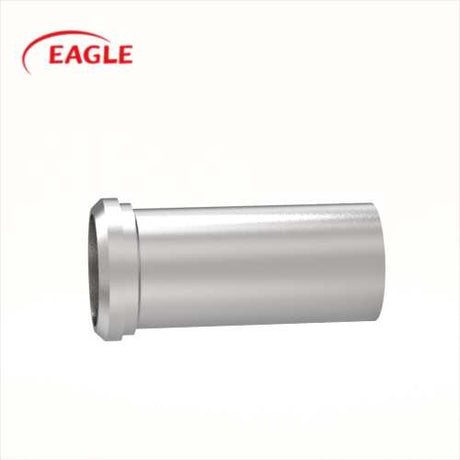
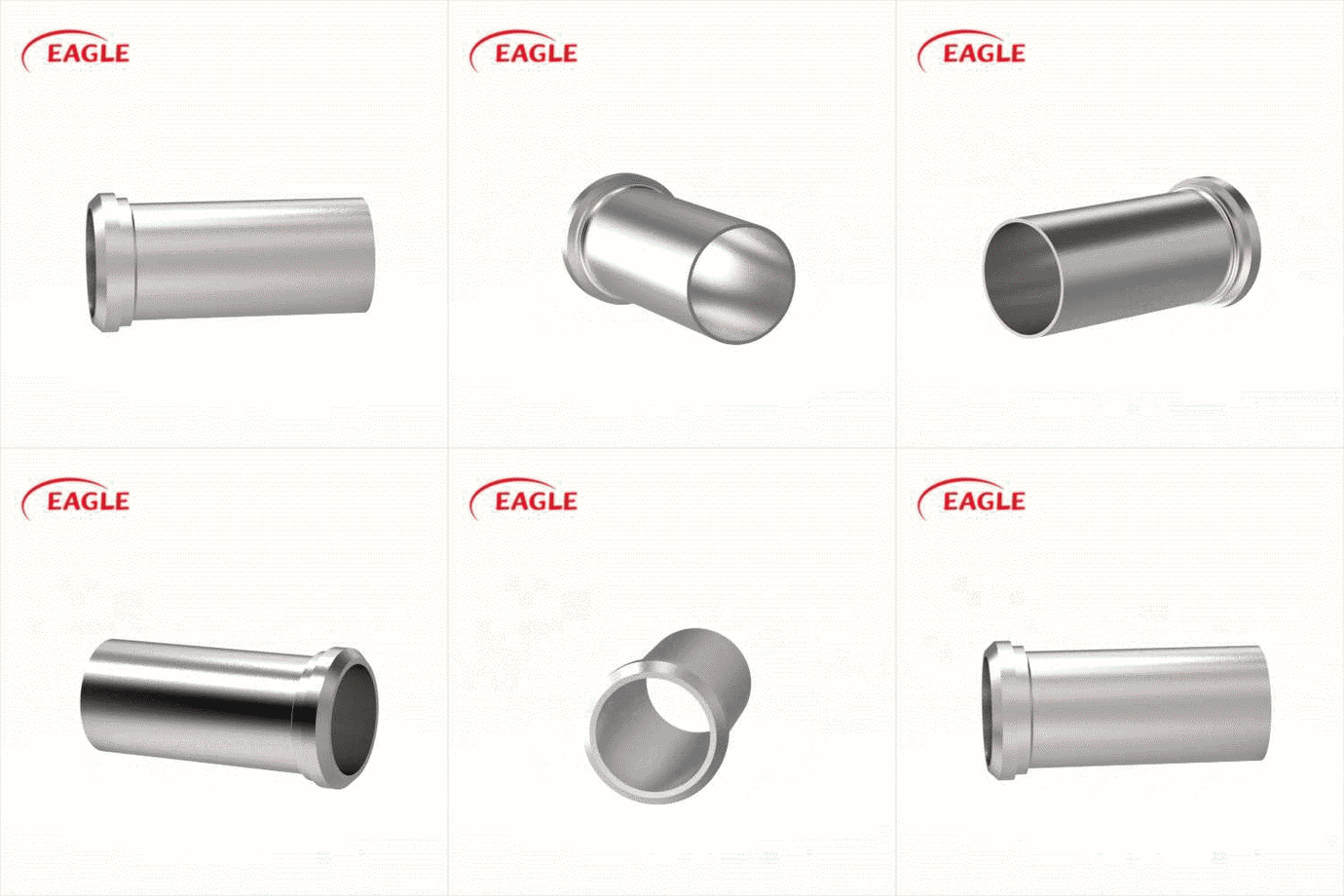
EAGLE™ 3A 14AHT Tygon-Schlauchadapter mit einfachem Kegelsitz
Sehr geringer Bestand (2 Einheiten)Ab $31.10Grundpreis /Nicht verfügbar -
2" Sanitär-Tygon-Schlauchadapter mit einfachem Schrägsitz
Sehr geringer Bestand (2 Einheiten)Ab $40.70Grundpreis /Nicht verfügbar -
1" Sanitär-Tygon-Schlauchadapter mit einfachem Schrägsitz
Sehr geringer Bestand (2 Einheiten)Ab $31.10Grundpreis /Nicht verfügbar -
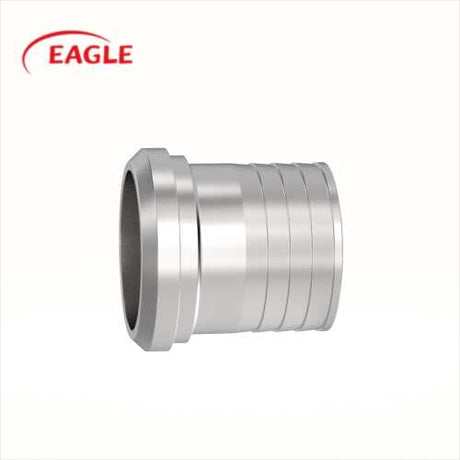
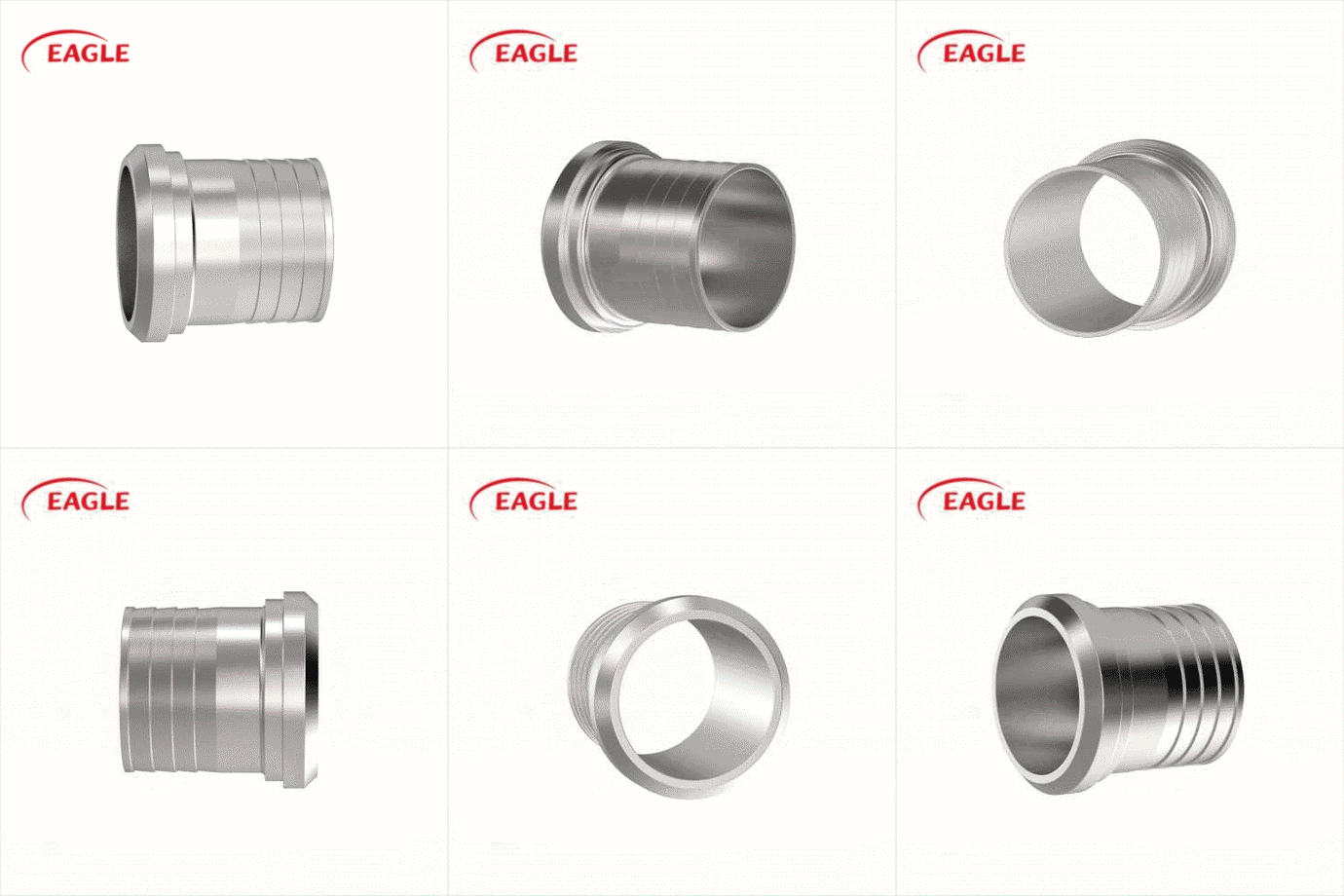
4" Gummischlauchadapter mit einfachem Kegelsitz
Sehr geringer Bestand (2 Einheiten)Ab $167.00Grundpreis /Nicht verfügbar -
2-1/2" Gummischlauchadapter mit einfachem Kegelsitz
Sehr geringer Bestand (2 Einheiten)Ab $128.00Grundpreis /Nicht verfügbar -
2" Gummischlauchadapter mit einfachem Kegelsitz
Sehr geringer Bestand (2 Einheiten)Ab $80.00Grundpreis /Nicht verfügbar -
1-1/2" Gummischlauchadapter mit einfachem Kegelsitz
Sehr geringer Bestand (2 Einheiten)Ab $55.30Grundpreis /Nicht verfügbar -
1" Gummischlauchadapter mit einfachem Kegelsitz
Sehr geringer Bestand (2 Einheiten)Ab $55.00Grundpreis /Nicht verfügbar -
3" Gummischlauchadapter mit einfachem Kegelsitz
Sehr geringer Bestand (2 Einheiten)Ab $147.00Grundpreis /Nicht verfügbar -
2-1/2" Außendurchmesser 304/316L Sanitär-Edelstahlrohr
Ab $131.20Grundpreis /Nicht verfügbar


