
Pneumatically Actuated Ball Valves: Types, Working Principle, Applications
A pneumatically actuated ball valve is a ball valve fitted with a pneumatic actuator — an air-driven device that rotates the valve's ball 90° to open or close it, powered...

A pneumatically actuated ball valve is a ball valve fitted with a pneumatic actuator — an air-driven device that rotates the valve's ball 90° to open or close it, powered...

Walk into any kitchen or bathroom, and you’ll interact with sanitary fittings—even if you don’t realize it.
1” and 1.5” tri clamps are not the same. Their differences in OD, gasket size, and flow capacity directly impact system performance

Eagle’s engineered fittings solve compatibility headaches – offering Tri Clamp’s hygienic advantages with DIN’s pressure resilience through adapters and hybrid designs.

Metric tubing (measured in millimeters) is essential for precision-driven industries like aerospace, medical devices, and automotive manufacturing.
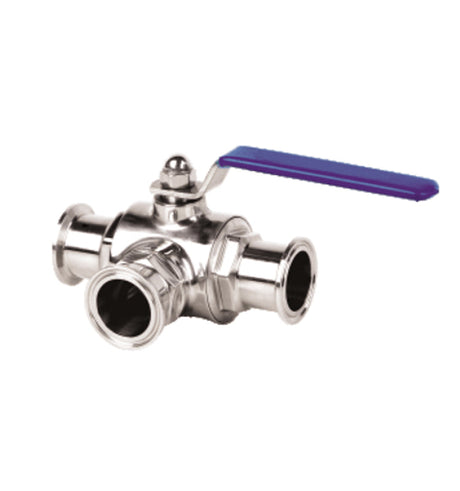
Unlike standard valves that simply stop/start flow, a 3-way valve adds precision control by mixing or diverting fluids.

45 degree elbows enable efficient directional changes where space, flow efficiency, or drainage requirements make 90° bends impractical.
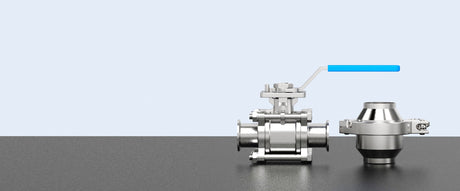
Tri clamp ball valves deliver unmatched hygiene and operational efficiency in sterile processing.

The connector between pipes (commonly called a pipe-to-pipe coupler) is critical for system integrity, but selecting the right type impacts leak resistance

Eagle’s precision-machined couplers and unions solve the compromise between strength and serviceability—delivering leak-free performance where standard fittings falter

ASTM standards for stainless steel fittings aren’t paperwork – they’re engineered safeguards against operational failures.

In industrial, food processing, and chemical applications, the choice between stainless steel hoses and rubber hoses directly impacts safety, durability, and operational efficiency.

If you work in pharmaceutical, biotech, or high-purity food processing, you’ve likely encountered "BPE" in technical specs or equipment manuals.

In pharmaceutical, food processing, and biotech facilities, the question of whether sanitary tubes are seamless isn’t academic—it directly impacts product purity and regulatory compliance

BPE fittings are engineered lifelines for industries where contamination carries existential risk.

A sanitary ball valve isn’t just a component – it’s your frontline defense against contamination in sensitive processes.